Degradation of the Meenachal River
The God of Small ThingsThe Meenachal River’s degradation is both an environmental transformation and a record of how Ayemenem distributes the costs of development. Once powerful enough to change lives, the river becomes a polluted, diminished channel: a barrage helps secure a second rice harvest, while the river absorbs waste and the people living along its banks bear the consequences. Its altered condition also exposes a contrast between local environmental damage and the polished image sold to visitors.
A river reshaped for agricultural gain
Downriver, a saltwater barrage regulates the inflow from backwaters connected to the Arabian Sea. The change permits two harvests of rice each year instead of one, a gain attributed to the influence of the paddy-farmer lobby. The narrative sets that increase against its environmental price: more rice comes at the river’s expense. The infrastructure is not presented as a neutral improvement; its benefits are counted in harvests, while the damaged waterway becomes the uncounted cost.
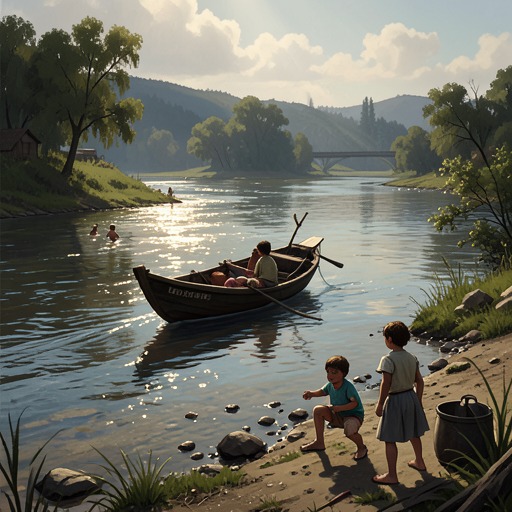
The river’s weakened state is striking even in June, during the rains. Instead of filling its former course with sustaining water, it has become little more than a swollen drain, with a narrow stream of thick water and dead fish. Weeds choke the channel, their roots moving underwater, while bronze-winged lily-trotters cross cautiously. The details register deterioration as a changed ecosystem rather than a single dramatic disaster: the water remains, but its capacity to support a living river has been diminished.
Pollution and the burden on residents
The river’s former force has given way to slow movement and waste. It carries garbage toward the sea, while plastic bags move across its surface and a film of scum remains behind. The stone steps that once brought bathers and fishers down to the water stand exposed, disconnected from the river they were built to meet. Ferns push through their cracks. The abandoned steps make the physical change legible: established uses of the river have lost their foundation.
Along one bank, shanty hutments sit above exposed mud where children relieve themselves. The river eventually carries away the day’s waste, while upstream residents wash clothes and pots in factory effluent and bathe in the same polluted water. These conditions make environmental damage a question of unequal exposure. The river receives both domestic waste and industrial discharge, and the people who rely on it remain in contact with the contamination. On warm days, the resulting odor reaches Ayemenem, carrying the river’s decline beyond its banks.
Years later, when Rahel returns, the river is associated with a ghastly, skull-like smile and a limp hand raised from a hospital bed. The image links the altered river to human vulnerability without turning the pollution into a single isolated incident. Its force comes from belated recognition: the remembered river and the river Rahel encounters belong to the same place, but no longer offer the same presence or possibility.
Tourism and the managed landscape
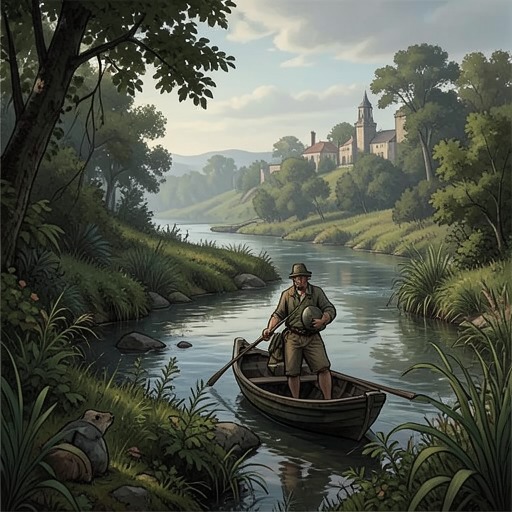
The changed river also alters access to the History House. The house can no longer be approached from the river and has turned its back on Ayemenem. Hotel guests arrive instead from Cochin, crossing the backwaters by speedboat. Their passage leaves foam and a rainbow film of gasoline on the water. The tourism that brings visitors to the heritage property thus depends on a route that adds another visible trace to the already altered environment.
Brochures call the destination God’s Own Country, while the people running the hotel treat the area’s unpleasant conditions as something that can be managed through discipline and air-conditioning. The trees are still green and the sky still blue, details that help sustain the promotional image, but they do not undo the pollution. The contrast exposes how the landscape’s appearance can be packaged while its damage is relegated to an inconvenience visitors are expected to tolerate—or be insulated from.
Significance
The Meenachal’s decline unfolds through accumulated changes: altered water flow, a reduced and weed-choked channel, waste, factory effluent, abandoned river steps, and tourism built around a new route. The sequence gives environmental harm duration and texture without reducing it to one spectacular event. Agricultural gains and visitor comforts are readily named; the river’s degradation and residents’ exposure register as costs displaced onto the place and people with less power to avoid them.
The river also carries narrative weight beyond its ecological condition. It once had the power to evoke fear and change lives; later, its diminished state marks how thoroughly the landscape has been altered. Its contamination reaches homes and bodies, its loss of depth unsettles old ways of approaching the History House, and its image returns with Rahel years later. The Meenachal is therefore not merely a backdrop to Ayemenem’s history: its damaged condition records the consequences of decisions made in the name of yield, access, and hospitality.